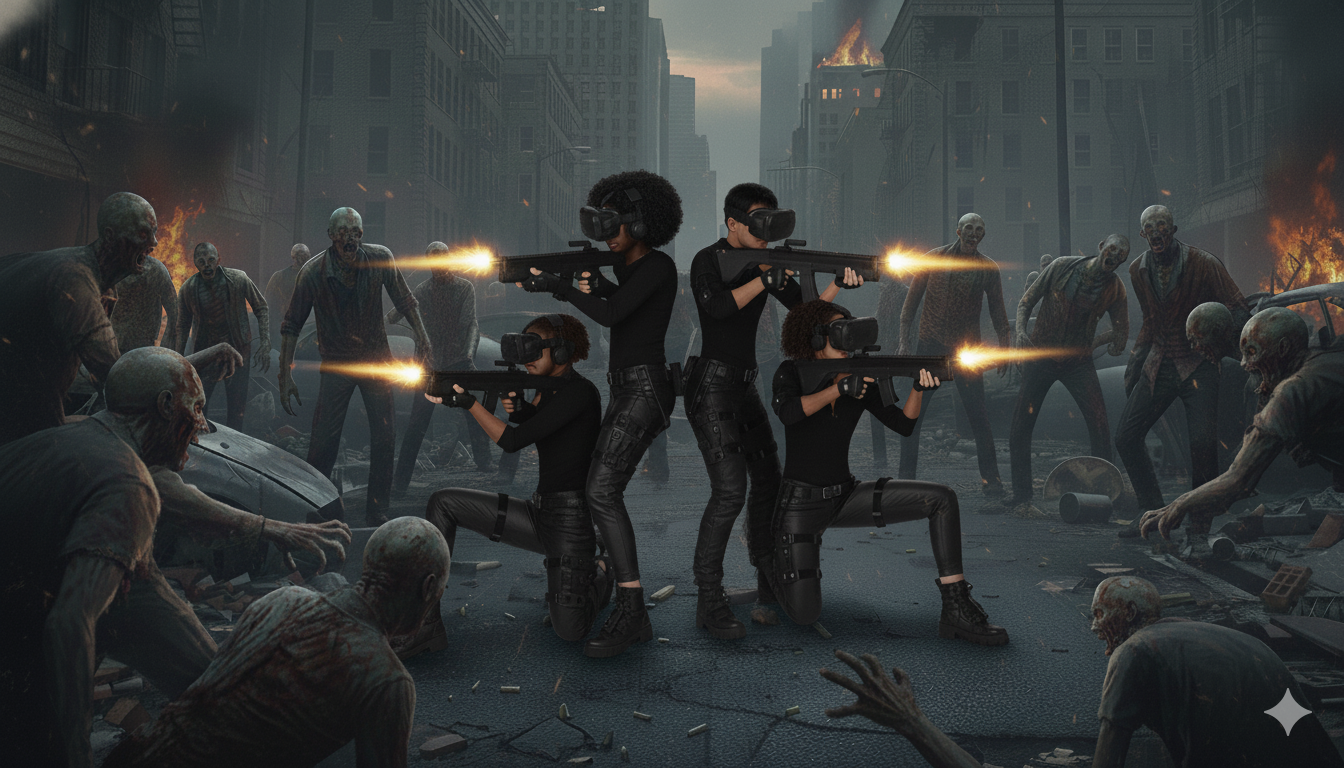
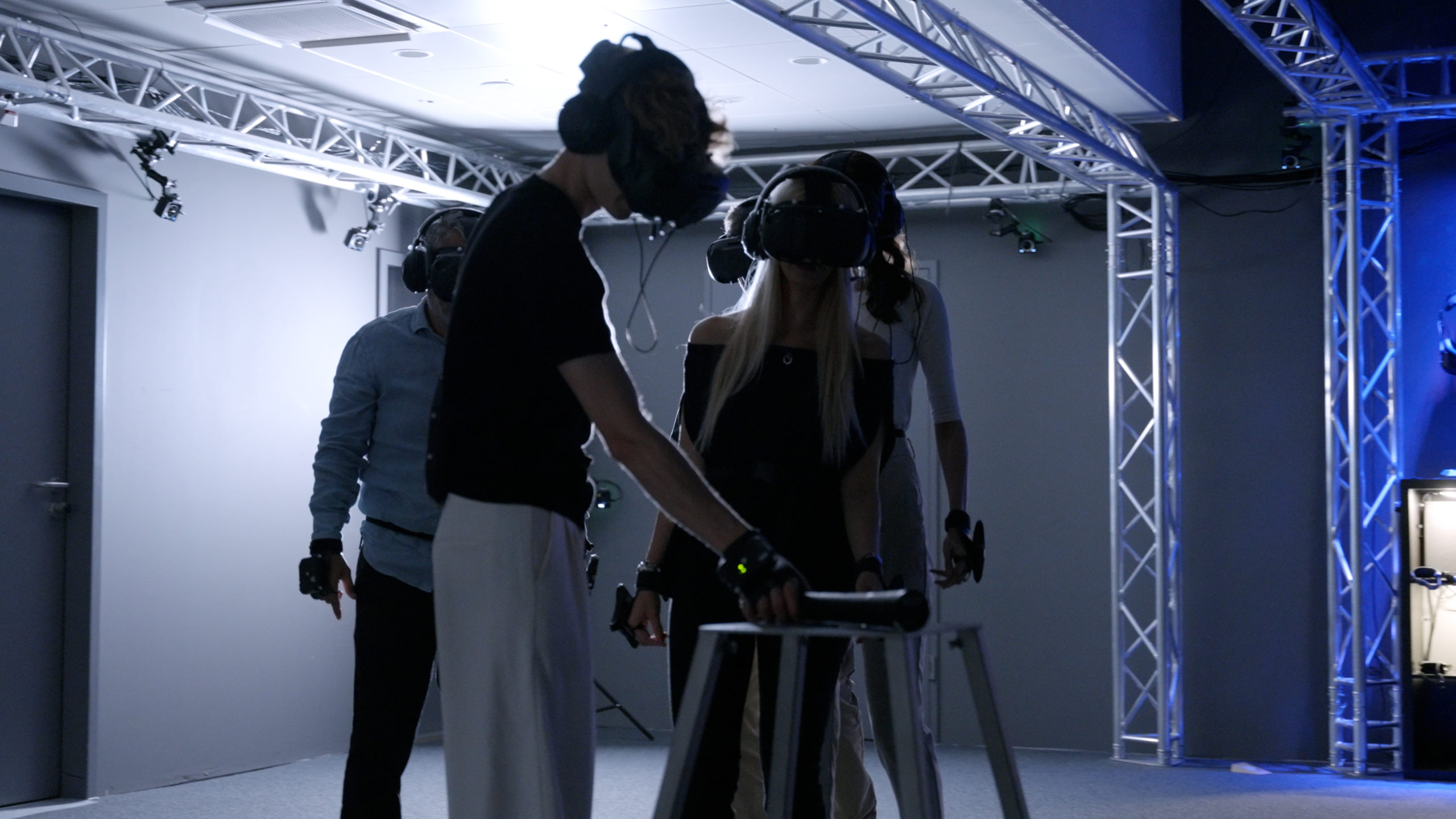
An elevator descends into a narrow, dark hole. Your head knows: This is just a room with trackers and a headset. Your body believes something else. Your pulse rises, your hand reaches for your colleague’s shoulder. Someone laughs nervously, another looks away. Later, almost everyone laughs about it.
That’s what a good VR experience is all about. Fear in the game doesn’t burden a team. It brings them closer together. What people fear varies: animals in the game, tight or enclosed spaces, elevators, small hatches, spider webs in the virtual light. Fear is a very personal thing. The person next to you rarely fears the same thing. Some only realize it in the moment itself.
I’ve been observing this for years in our arenas. People without fear rarely say “It’s just virtual.” They stand still and speak reassuringly. The trust from that moment often carries back to the office.
Mel Slater, VR researcher at the University of Barcelona, has studied this for years: When a virtual body is threatened, the brain responds with a stress reaction just like it would to a real threat. Consciously you know: Just a game. Part of the nervous system still reacts as if it were real—heartbeat and hand sweat measurably increase. Such a reaction can hardly be artificially created in a meeting room.
That’s the difference from an ordinary team outing. Bastian, Jetten, and Ferris showed in a widely cited 2014 study: Shared stress increases trust and cooperation more strongly than shared pleasant moments. Those who go through tension together are more likely to cooperate afterward. For a team that otherwise only sees each other in meetings, this is a rare dose of shared tension.
The creepy moments in our full-body VR team events are therefore not a disruptive factor that should be designed away. They’re the reason why a team relates to each other differently after the session than before. That turns a nice afternoon into more than just a nice afternoon.
If you want to experience this yourself, find the options at VR Center Basel https://fusionarena.ch/basel/ VR Center Bern https://fusionarena.ch/bern/ and VR Center Zurich https://fusionarena.ch/zuerich/
Sources: Bastian, Jetten & Ferris (2014), Psychological Science – “Pain as Social Glue: Shared Pain Increases Cooperation”; Mel Slater, University of Barcelona, research on presence and virtual threat response in VR.