A Virtual Reality team event is more than just a game with a VR headset. When the technology, game mechanics, and support are right, it creates a format that makes communication, trust, and collaboration visible. If these factors are missing, it’s just nice entertainment.
But what actually determines whether VR team building really works?
1. The technology must be stable
The technical foundation is crucial. Movements must be transmitted 1:1, without noticeable latency. As soon as there is a delay between real movement and the virtual representation, the risk of motion sickness increases.
At Fusion Arena, we are at under 2%. This is no coincidence, but the result of a stable system. Our partner TrueVRSystems from Dietlikon, Zurich, provides full-body Virtual Reality with 4D effects like wind, heat, and scent. The system works synchronously and consistently – the brain accepts the environment as logical, which significantly reduces nausea.
2. Multiplayer is key
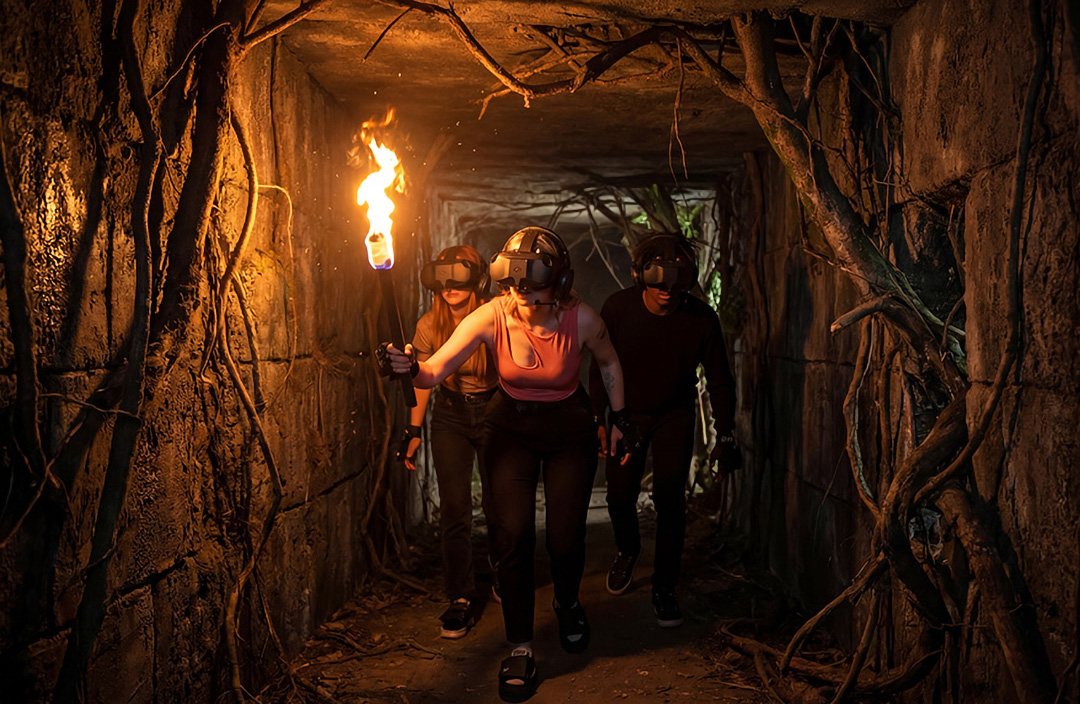
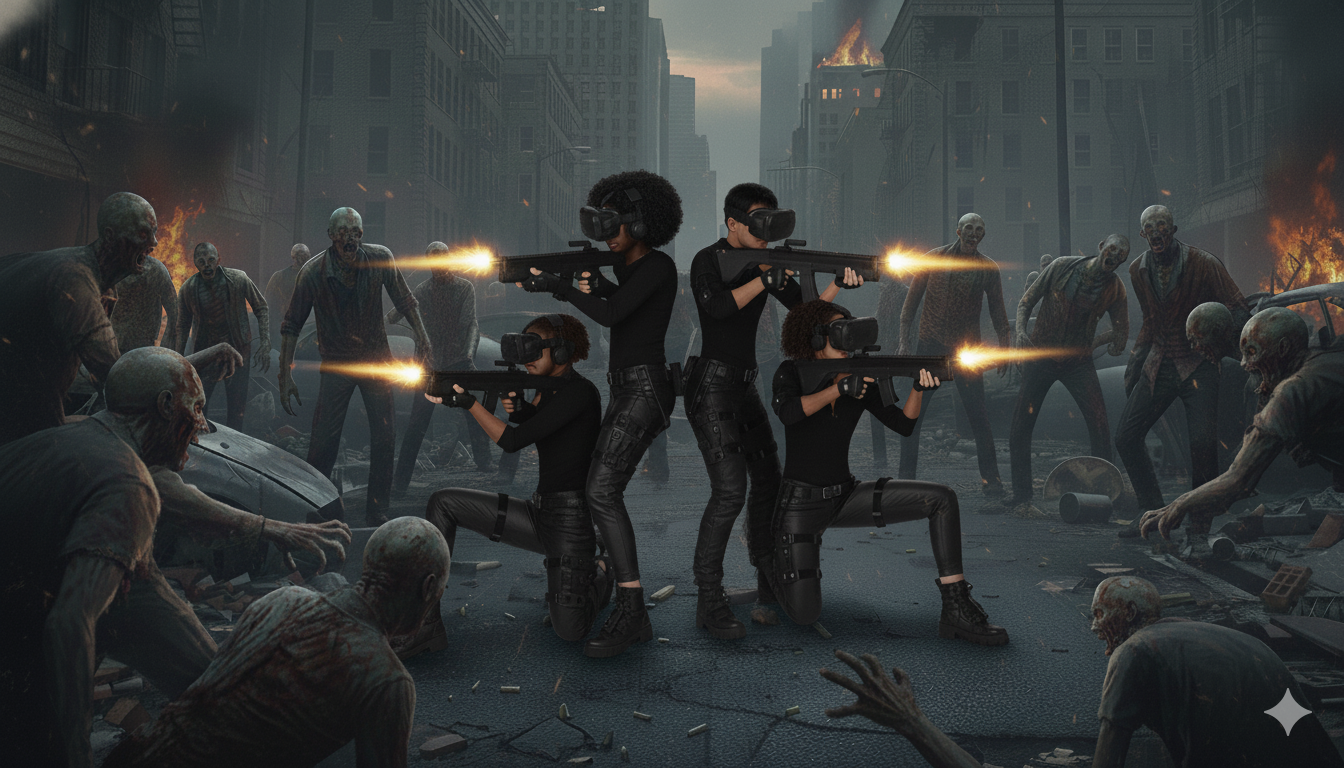
A real VR team event means that 3 to 10 people are in the same game at the same time. It’s not about single-player experiences, but about acting together.
Especially for a corporate event in VR, this aspect is central: the game must promote and structure collaboration.
Teams must communicate, share information, solve puzzles, and overcome obstacles together. If people don’t talk or information isn’t passed on, the team reaches the goal more slowly. In the end, however, everyone wins – just with different levels of efficiency.
3. Using emotions intentionally
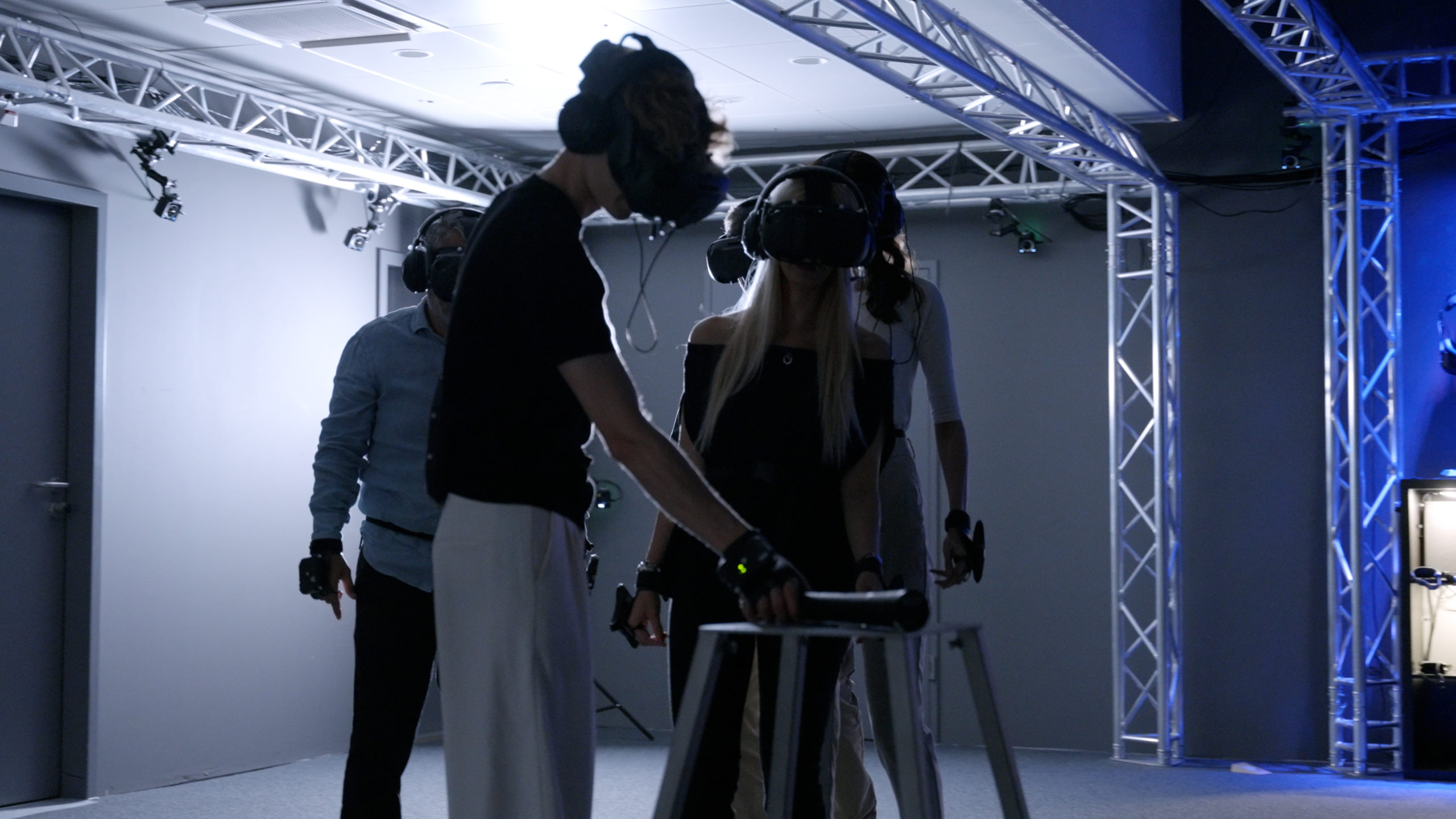
Emotions are part of it. Fear of heights, for example, can be used intentionally. At our locations in Basel, Bern, St. Gallen, and Zurich, a physical board reinforces the virtual height. This creates real reactions.
However, we learned back in 2018: triggers like snakes or spiders can, in the worst case, trigger panic attacks. A VR corporate event should be challenging, but never psychologically overwhelming.
Frustration can occur in the game. The key is that the experience ends on a positive note and the team has a shared sense of achievement.
4. Psychology is more important than you think
A classic example: five people walk across the board without any problems. The sixth person hesitates but says nothing. They don’t want to appear insecure. They refuse help. And lose their balance.
This isn’t a technical problem, but group dynamics.
That’s why well-trained staff are needed. Our game masters are technically trained and also learn to recognize non-verbal signals. People who are afraid but don’t show it can be at risk in such situations. Attentiveness is crucial here.
A professional Virtual Reality team event stands or falls with the support provided.
5. Immersion without barriers
Immersion doesn’t just mean graphic quality. It’s about people being able to move intuitively – without nets, cables, or complicated controllers that inhibit non-gamers.
Full-body VR without distracting elements lowers the barrier to entry. 4D effects increase the credibility of the environment. This doesn’t guarantee teamwork, but it makes it easier for collaboration to work naturally and stay in the flow of the game.
6. Age doesn’t matter
Virtual Reality team building isn’t limited to one age group. In Zurich, we had an 89-year-old participant with two damaged hips. In Bern, a 93-year-old woman.
It’s not age that matters, but the willingness to try something new.
Conclusion
A successful Virtual Reality team event in Switzerland is based on:
- stable technology with minimal latency
- real multiplayer design
- intentionally managed emotions
- psychologically trained staff
- high immersion through 4D effects
- a positive overall experience
Have you experienced a real VR team event yourself – or just a short demo?
Image source: Google Reviews Fusion Arena, Jasmin F. 2019